Wildfires Could Impact Your Indoor Air Quality: What Facility Managers Need to Know
By Clinical Cleaning Services ·
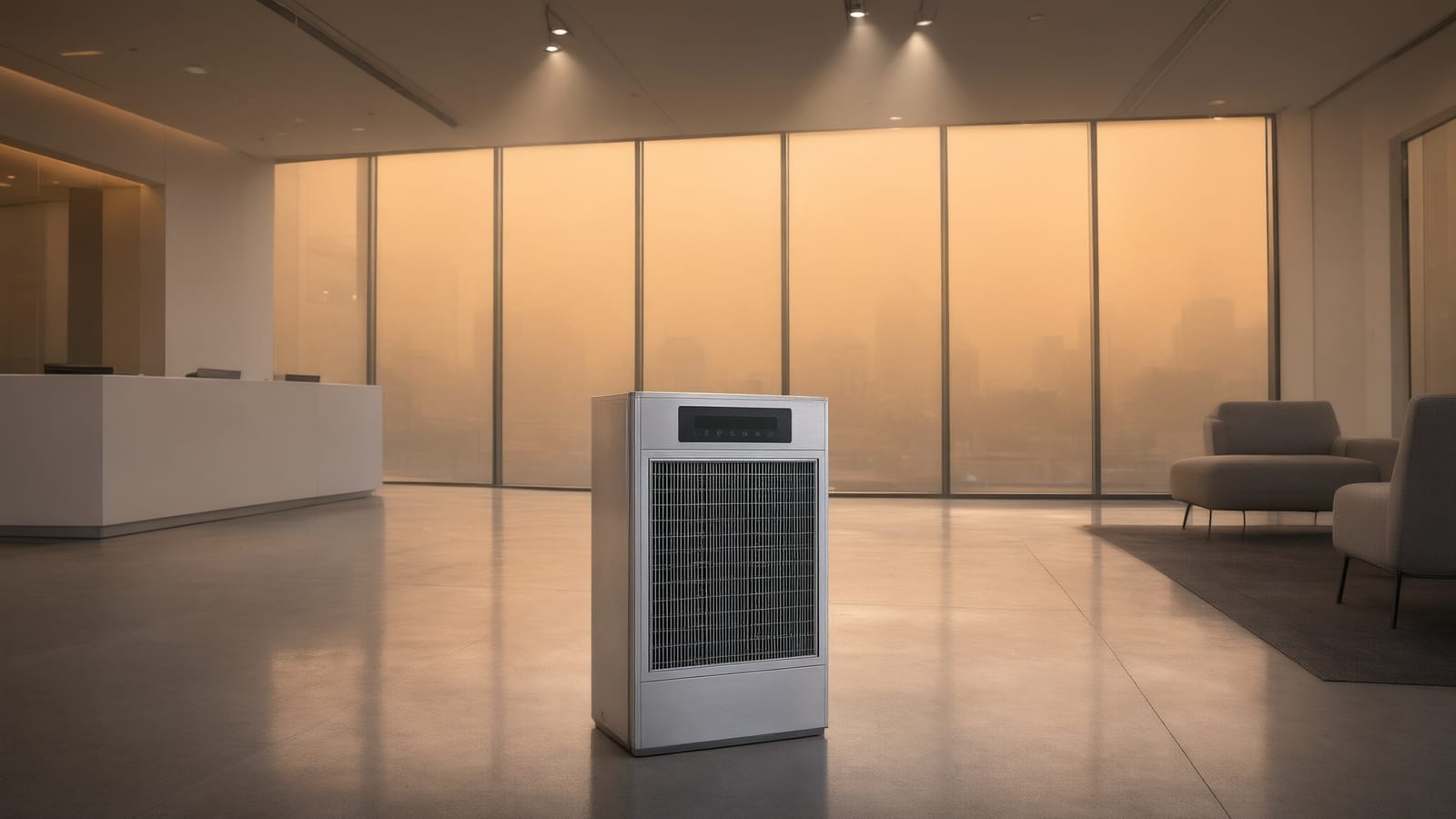
Wildfire smoke doesn’t stop at your building’s exterior walls: it directly compromises wildfire smoke indoor air quality, introducing hazardous fine particulate matter (PM2.5) and volatile organic compounds into commercial spaces across Central Florida. Whether from regional wildfires or distant fires carried by easterly winds, this intrusion occurs through HVAC systems, gaps around doors and windows, and building envelope penetrations. For facility managers, this creates immediate occupant health concerns, potential ASHRAE 62.1 compliance issues, and post-event maintenance demands that standard cleaning protocols don’t address.
How Does Wildfire Smoke Enter Commercial Buildings?
Wildfire smoke enters commercial buildings through three primary pathways: mechanical ventilation systems that draw in outdoor air, infiltration through gaps in the building envelope, and natural air exchange when doors open and close. Even buildings with well-sealed envelopes experience smoke intrusion because most commercial HVAC systems are designed to introduce a percentage of outdoor air to meet ventilation standards [1].
The size of smoke particles determines how deeply they penetrate your building. PM2.5 particles, those smaller than 2.5 micrometers, remain suspended in air for hours and travel through standard HVAC filters rated MERV 8 or lower. These particles are small enough to bypass fiberglass panel filters and many pleated filters commonly used in commercial rooftop units [2].
During a smoke event, your building’s air handling units continue pulling outdoor air at designed ventilation rates. If your system introduces 20% outdoor air to meet ASHRAE 62.1 requirements, it’s also introducing 20% smoke-laden air. The result: indoor PM2.5 concentrations can reach 50-80% of outdoor levels within hours, even with standard filtration in place [1].
What Are the Health Impacts on Building Occupants?
Exposure to wildfire smoke causes immediate respiratory irritation, eye discomfort, headaches, and aggravated asthma symptoms in building occupants. For workers in commercial office environments, retail spaces, or medical facilities, these symptoms reduce productivity, increase sick leave, and create liability concerns for building owners and property managers [2].
The health effects are dose-dependent: longer exposure and higher PM2.5 concentrations increase symptom severity. Fine particles penetrate deep into lung tissue and can enter the bloodstream, causing cardiovascular stress in addition to respiratory problems. Vulnerable populations, employees with asthma, cardiovascular conditions, or compromised immune systems, experience more severe reactions [1].
For facility managers, occupant complaints during smoke events create operational pressure. Workers report difficulty concentrating, throat irritation, and fatigue. In medical facilities, smoke exposure can compromise patient care environments. Hotels face guest complaints and potential reputational damage when visitors experience smoke-related discomfort during their stay.
How Should HVAC Systems Respond During Smoke Events?
During wildfire smoke events, facility managers should switch HVAC systems to recirculation mode, upgrade filtration to MERV 13 or higher, and seal outdoor air dampers to minimize smoke introduction. These steps reduce indoor PM2.5 concentrations by 60-80% compared to normal ventilation operation, though they temporarily reduce fresh air delivery below ASHRAE 62.1 design levels [3].
MERV 13 filters capture 85% of particles between 1-3 micrometers, including most wildfire smoke particles. However, upgrading filtration requires checking your air handling unit’s static pressure capacity: higher-efficiency filters create more airflow resistance. If your system wasn’t designed for MERV 13, installing these filters can reduce airflow, strain fan motors, and decrease cooling capacity [2].
Portable air cleaners with HEPA filters provide supplemental cleaning in critical areas like conference rooms, lobbies, or medical waiting areas. For a 500-square-foot space, you’ll need a unit rated for that room size with a clean air delivery rate (CADR) of at least 300 cubic feet per minute. Running multiple units in larger open-plan offices creates overlapping clean zones [3].
The trade-off is real: reducing outdoor air intake during smoke events improves particle filtration but allows CO2 and VOC concentrations to rise. Most facility managers accept this temporary compromise during acute smoke events lasting 24-72 hours, then return to normal ventilation once outdoor air quality improves.
What Does ASHRAE 62.1 Say About Smoke Events?
ASHRAE Standard 62.1 establishes minimum ventilation rates for acceptable indoor air quality but does not specifically address emergency smoke events. The standard assumes outdoor air meets EPA’s National Ambient Air Quality Standards: an assumption that fails during wildfire smoke episodes when PM2.5 levels can exceed 150 micrograms per cubic meter, five times the 24-hour standard [1].
Facility managers face a compliance dilemma during smoke events: maintain required outdoor air ventilation rates and expose occupants to harmful smoke particles, or reduce outdoor air and fall below ASHRAE 62.1 minimums. Most building codes and health departments recognize this conflict and allow temporary deviations during declared air quality emergencies, though documentation is essential [3].
For buildings in Florida’s wildfire-prone regions, some engineers recommend designing HVAC systems with “smoke mode” capabilities: motorized dampers that close outdoor air intakes when activated, variable-speed fans that maintain airflow despite higher filter resistance, and building automation system programming that switches modes based on outdoor air quality sensors. These features add 5-8% to HVAC system costs but provide operational flexibility during smoke events [2].
What Post-Smoke-Event Cleaning Is Required?
After a wildfire smoke event, commercial buildings require thorough cleaning of all horizontal surfaces, HVAC filter replacement, and carpet extraction to remove accumulated particulate matter. Smoke particles settle on desks, shelves, window sills, and equipment surfaces, creating a fine gray film that standard dusting redistributes rather than removes [4].
HEPA-filtered vacuum cleaners capture particles that conventional vacuums exhaust back into the air. For commercial carpet in lobbies, hallways, and office areas, hot water extraction removes embedded smoke particles and any VOCs that adsorbed onto carpet fibers during the event. Hard floors need damp mopping with microfiber pads: dry mopping or sweeping aerosolizes settled particles [4].
HVAC filters exposed to smoke events load rapidly with fine particles, increasing static pressure and reducing airflow even after outdoor air quality improves. Replace all return air filters after a multi-day smoke event, and inspect supply air filters for particle breakthrough. If your building uses energy recovery ventilators or air-side economizers, inspect heat exchange surfaces for particle accumulation that reduces efficiency [3].
For medical facilities, hotels, and other environments where air quality directly affects occupant health or guest experience, consider duct inspection and cleaning after severe or prolonged smoke events. Particles that bypass filters accumulate in ductwork and can re-enter occupied spaces during normal operation.
When Is Florida at Highest Risk for Wildfire Smoke?
Florida experiences elevated wildfire risk during dry seasons (November through May) and during drought conditions that occur periodically across the state. Easterly winds can also carry smoke from wildfires in Georgia, the Carolinas, or even the western United States, creating multi-day smoke events in Central Florida even when no local fires are burning [1].
The 2023 Canadian wildfires demonstrated how distant fires can degrade Florida’s air quality for weeks. Smoke traveled south through the jet stream and settled across the southeastern United States, pushing PM2.5 levels in Orlando above 100 micrograms per cubic meter for three consecutive days: levels typically seen only in cities with chronic pollution problems [2].
Climate models project increased wildfire activity across the southeastern United States due to higher temperatures, extended dry periods, and more frequent lightning strikes. For facility managers in Central Florida, smoke events that occurred once every 5-10 years may become annual occurrences requiring standard operating procedures and pre-positioned supplies like MERV 13 filters and portable air cleaners [1].
Practical Steps for Facility Managers
Before smoke season: Inventory your HVAC system’s filter capacity, purchase MERV 13 filters that fit your units, identify portable air cleaners for critical spaces, and develop a smoke-event response plan that assigns responsibilities for system adjustments and occupant communication.
During smoke events: Monitor EPA’s AirNow.gov for real-time PM2.5 levels, switch HVAC systems to recirculation mode when outdoor AQI exceeds 150, deploy portable air cleaners in high-occupancy areas, and communicate with building occupants about temporary ventilation changes.
After smoke events: Replace loaded HVAC filters, conduct thorough surface cleaning with HEPA vacuums and damp wiping, extract carpets in high-traffic areas, and document the event for compliance records and insurance purposes.
For facilities without in-house maintenance staff capable of executing these protocols, professional cleaning services can provide post-event deep cleaning that addresses both visible residue and embedded particles in carpet, upholstery, and hard-to-reach surfaces.
When to Call Professional Cleaning Services
Smoke events lasting more than 48 hours, or events where indoor PM2.5 exceeded outdoor levels due to system failures, typically require professional cleaning beyond routine janitorial capabilities. Professional crews bring HEPA-filtered extraction equipment, commercial-grade air scrubbers, and systematic cleaning protocols that address particle accumulation in ductwork, ceiling tiles, and porous surfaces [4].
Medical facilities, hotels, and Class A office buildings face higher standards for post-event air quality. Occupants in these environments expect rapid return to normal conditions, and visible smoke residue or lingering odors create complaints and potential liability. Professional post-event cleaning restores both air quality and the visual presentation that commercial properties require.
Need professional cleaning after a wildfire smoke event? Clinical Cleaning Services provides post-event deep cleaning for commercial facilities in Central Florida, including carpet extraction, surface cleaning, and HVAC-area maintenance: as well as our full range of commercial cleaning services. Contact us at (407) 595-7717 or request a quote at clinicalcleaningservices.com/contact. For guidance on a related indoor air quality hazard, read our mold remediation guide for commercial facilities in Florida.
Key Takeaways: Wildfire Smoke Indoor Air Quality
- Wildfire smoke significantly degrades wildfire smoke indoor air quality, especially in Central Florida’s humid, wind-exposed climate.
- Standard HVAC filtration (MERV 8 or lower) offers minimal protection; proactive upgrades to MERV 13+ and recirculation mode are essential during events.
- Post-event cleaning must go beyond surface dusting: HEPA vacuuming, hot water carpet extraction, and HVAC filter replacement are non-negotiable for restoring safe, compliant indoor air.
- Facilities lacking in-house technical staff or specialized equipment should engage professional cleaning services: particularly for medical, hospitality, and Class A office properties where occupant expectations and regulatory scrutiny are highest.
- Preparation matters: maintaining an inventory of MERV 13 filters, portable HEPA air cleaners, and a documented smoke-response plan enables faster, safer operational continuity.
About Clinical Cleaning Services
Clinical Cleaning Services is a family-owned commercial cleaning company serving Central Florida since 2005. Our OSHA-certified technicians are fully insured, and our crews work in offices, medical facilities, retail stores, churches, schools, hotels and active construction sites: commercial janitorial services, post-construction cleaning, floor care and terrazzo restoration, carpet cleaning, pressure washing, glass cleaning and disinfection. For a quote, call (407) 595-7717, write to info@clinicalcleaningservices.com or use the form at clinicalcleaningservices.com/contact.
References
[1] U.S. Environmental Protection Agency. (2024). Wildfires and Indoor Air Quality (IAQ). Retrieved from https://www.epa.gov/indoor-air-quality-iaq/wildfires-and-indoor-air-quality-iaq
[2] American Society of Heating, Refrigerating and Air-Conditioning Engineers. (2022). ASHRAE Position Document on Filtration and Air Cleaning. ASHRAE.
[3] U.S. Environmental Protection Agency. (2023). Indoor Air Filtration and Cleaning for Wildfire Smoke. EPA 402-F-23-001.
[4] Carpet and Rug Institute. (2021). Carpet Maintenance Guidelines for Commercial Facilities. CRI.
Need Professional Cleaning?
Serving businesses across Central Florida for 20+ years. Get a free quote today.
🕐 Available 24/7
Ready to work with a cleaning partner you can actually trust?
Get your free quote today. We respond within 24 hours.
Get a Free Quote