When Standard Cleaning Is Not Enough: A Facility Manager's Guide to Mold Remediation in Central Florida
By Clinical Cleaning Services ·
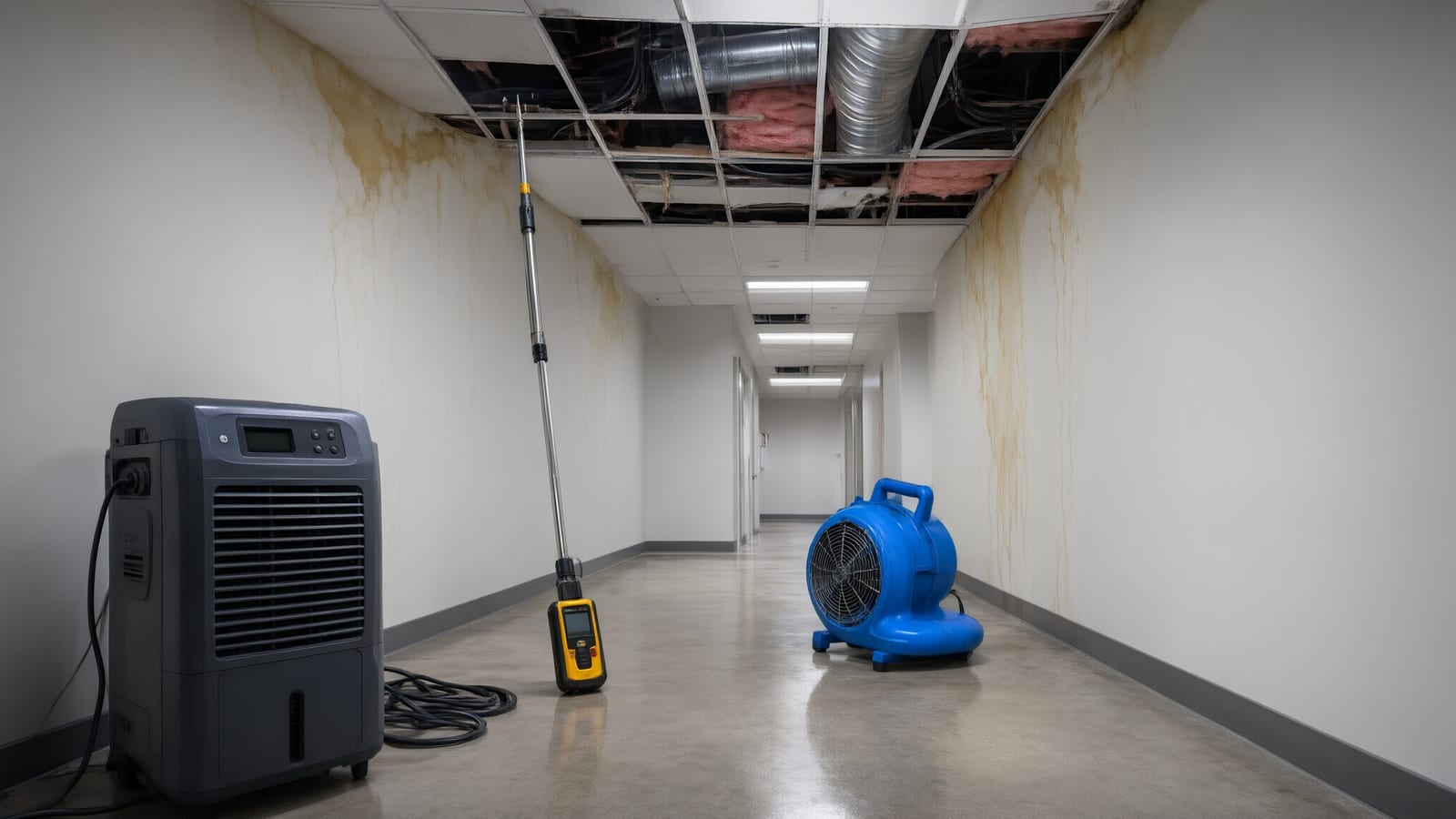
Mold in a commercial facility is not a cleaning problem: it is a remediation problem. When moisture, organic material and Florida’s year-round humidity converge inside a building, surface cleaning alone cannot address the underlying colonization. Facility managers who recognize the difference between routine cleaning and professional remediation protect their properties, their occupants and their operational continuity: especially when addressing mold remediation commercial facilities Florida.
The recent expansion of specialized mold remediation franchises into the Southeast underscores a market reality: demand for health-focused remediation is growing, and facility managers need to understand when standard janitorial services are sufficient and when a certified remediation provider is required [1].
What Separates Mold Remediation from Standard Cleaning?
Mold remediation is a controlled process that identifies, contains, removes and prevents mold colonization at its source; standard cleaning addresses visible surface contamination without addressing the moisture conditions that allow mold to return. The distinction matters because treating mold as a cleaning issue often leads to recurring problems and escalating damage.
Standard commercial cleaning removes surface dirt, dust and visible staining from floors, walls and fixtures. It uses general-purpose disinfectants and mechanical action. Mold remediation, by contrast, follows protocols established by organizations like the IICRC (Institute of Inspection, Cleaning and Restoration Certification) and the EPA, involving containment of affected areas, HEPA-filtered air scrubbing, removal of contaminated porous materials, antimicrobial treatment and moisture-source correction [2].
A janitorial crew that wipes down a wall with visible mold may remove the surface growth temporarily, but if the moisture source, a slow leak, condensation on uninsulated ductwork, or humidity infiltration through a compromised building envelope, remains unaddressed, the mold returns within days or weeks. Remediation addresses the colony and the conditions that sustain it.
Why Central Florida Facilities Face Elevated Mold Risk
Central Florida’s climate creates mold-conducive conditions in commercial buildings year-round: outdoor relative humidity averages above 70% for most of the year, summer rainfall exceeds 50 inches in the Orlando metro area, and temperature differentials between air-conditioned interiors and hot, humid exteriors drive condensation on surfaces, inside wall cavities and above ceiling tiles [3].
Commercial facilities in the region face specific vulnerability points:
- HVAC systems that cycle on and off without adequate dehumidification, leaving condensation on coils, drain pans and duct surfaces.
- Building envelopes with micro-leaks around windows, roof penetrations or wall joints that admit moisture during afternoon thunderstorms.
- High-traffic entryways where rain-soaked foot traffic introduces moisture that migrates under floor coverings and into subflooring.
- Post-construction conditions where new materials, fresh drywall and paint release moisture during the curing period, and temporary HVAC may not yet provide adequate dehumidification.
Facility managers who operate in this environment must treat moisture control as an ongoing maintenance priority, not a seasonal concern.
Signs Your Facility Needs Remediation, Not Just Cleaning
Determining whether a mold situation requires professional remediation depends on the extent of colonization, the materials affected and the underlying moisture conditions. The EPA recommends professional remediation when visible mold covers more than 10 square feet, when mold is present in HVAC systems, or when contamination involves porous materials like drywall, insulation or carpet padding [4].
Facility managers should escalate to a remediation specialist when they observe:
Persistent musty odors that return within days of cleaning, indicating hidden colonization inside walls, above ceilings or under flooring.
Recurring visible growth on the same surfaces after repeated cleaning, signaling an unresolved moisture source.
Water damage history: any area that experienced flooding, roof leaks, pipe bursts or prolonged condensation without professional drying is at elevated risk for hidden mold.
Occupant complaints of respiratory irritation, headaches or allergic symptoms that correlate with time spent in specific areas of the building.
Mold in HVAC components: colonization inside air handlers, on coils, in ductwork or on insulation lining requires specialized equipment and containment procedures beyond janitorial scope.
When any of these conditions exist, continuing to treat the situation as a cleaning problem delays effective resolution and may allow contamination to spread through air circulation.
What Certifications and Standards Should Facility Managers Look For?
The mold remediation industry is not uniformly regulated across states, and Florida does not require a specific state license for mold remediation contractors: though general contractor licensing and local business licensing still apply [5]. This makes third-party certifications the primary indicator of a provider’s training and adherence to industry protocols.
Facility managers evaluating remediation providers should verify:
IICRC S520 certification: the Standard for Professional Mold Remediation, which defines containment, removal, cleaning and verification protocols. Technicians holding this certification have completed coursework and examination on current remediation practices [6].
EPA guidelines compliance: the EPA’s “Mold Remediation in Schools and Commercial Buildings” publication outlines containment levels, personal protective equipment, removal methods and clearance criteria that reputable providers follow regardless of whether the facility is a school or commercial property [4].
Insurance and bonding: remediation work involves structural modification (removing drywall, flooring or ceiling materials), hazardous material handling and potential liability for inadequate containment. Providers should carry general liability insurance and workers’ compensation coverage appropriate for the scope of work.
Third-party clearance testing: best practice separates the remediation contractor from the verification tester. An independent industrial hygienist or environmental consultant performs post-remediation air and surface sampling to confirm that contamination levels have returned to normal conditions.
The growth of franchise-based remediation brands reflects increasing market demand, but facility managers should evaluate individual franchise locations on their certifications, insurance, references and adherence to these standards rather than relying solely on brand recognition [1].
Preventive Maintenance: What Facility Managers Can Control
While professional remediation addresses active mold problems, preventive maintenance reduces the conditions that allow mold to establish in the first place. These measures fall within the scope of routine facility maintenance and commercial cleaning programs:
Moisture monitoring at known vulnerability points: entryways, below-grade spaces, around HVAC equipment, near plumbing penetrations and at roof flashing. Infrared thermography can identify temperature anomalies that indicate hidden moisture before visible damage appears.
HVAC maintenance that includes regular filter changes, coil cleaning, drain pan inspection and verification that the system achieves target dehumidification levels (indoor relative humidity below 60%, ideally 40-50%) [4].
Prompt water damage response: any leak, spill or condensation event should be dried within 24-48 hours to prevent mold germination. This includes extracting standing water, deploying air movers and dehumidifiers, and removing porous materials that cannot be dried completely.
Entryway moisture management: matting systems that capture rainwater from foot traffic, regular extraction of moisture from carpeted areas near entrances, and inspection of subflooring conditions in high-traffic zones. For more on managing moisture at entry points in Florida climates, see our coverage of commercial floor care in high-humidity conditions.
Post-construction drying protocols: new construction and renovation projects introduce significant moisture through concrete curing, drywall finishing and paint application. Adequate temporary HVAC operation and moisture monitoring before enclosing walls prevents trapping moisture inside assemblies. For guidance on preparing newly constructed spaces, review our post-construction cleaning guide.
When Do Commercial Facilities in Florida Need Mold Remediation?
Facility managers should engage a certified mold remediation provider when:
- Visible mold exceeds 10 square feet or appears in multiple areas of the building.
- Mold is present inside HVAC systems or ductwork.
- Contamination involves porous building materials (drywall, insulation, carpet padding, ceiling tiles) that cannot be surface-cleaned.
- Moisture sources have been identified but mold persists after standard cleaning attempts.
- Occupant health complaints suggest hidden mold contamination.
- The facility is preparing for real estate transactions, tenant turnover or regulatory inspections that require environmental clearance.
For routine maintenance, surface cleaning and moisture control, commercial janitorial services remain the appropriate resource. The distinction is operational: janitorial crews maintain clean, presentable facilities; remediation specialists address biological contamination that threatens building integrity and occupant health.
Key Takeaways
- Mold remediation for commercial facilities in Florida is a specialized, protocol-driven service, not an extension of routine cleaning, and must be deployed when moisture intrusion has led to biological colonization.
- Central Florida’s persistent humidity, intense rainfall and thermal bridging make proactive moisture management essential, not optional, for all commercial facility types.
- Facility managers should act at the first sign of persistent odor, recurring growth, or occupant complaints, not wait for visible spread, because delayed intervention increases cost, downtime and health risk.
- Always verify IICRC S520 certification, third-party clearance testing, and full insurance coverage before engaging a mold remediation provider.
- Routine janitorial services remain vital for daily upkeep, but they are not equipped to resolve active mold contamination or correct underlying moisture failures.
Next Steps for Central Florida Facility Managers
Mold is a predictable consequence of Florida’s climate when moisture management falls short. Facility managers who understand the boundary between cleaning and remediation make better decisions about when to deploy their janitorial teams and when to engage specialized contractors.
If your facility shows signs of persistent mold, unresolved moisture problems or occupant complaints related to indoor air quality, a professional assessment can determine whether remediation is necessary. For routine commercial cleaning, floor maintenance and preventive moisture management, contact Clinical Cleaning Services to discuss a maintenance program designed for Central Florida’s climate and your facility’s operational requirements.
About Clinical Cleaning Services
Clinical Cleaning Services is a family-owned commercial cleaning company serving Central Florida since 2005. Our OSHA-certified technicians are fully insured, and our crews work in offices, medical facilities, retail stores, churches, schools, hotels and active construction sites: commercial janitorial services, post-construction cleaning, floor care and terrazzo restoration, carpet cleaning, pressure washing, glass cleaning and disinfection. For a quote, call (407) 595-7717, write to info@clinicalcleaningservices.com or use the form at clinicalcleaningservices.com/contact.
References
[1] Cleanfax, “Mold Medics Taps Franchise FastLane to Accelerate Expansion of Health-Focused Mold Remediation Brand,” November 2026. https://cleanfax.com/mold-medics-taps-franchise-fastlane-to-accelerate-expansion-of-health-focused-mold-remediation-brand/
[2] IICRC, “S520 Standard for Professional Mold Remediation.” https://www.iicrc.org/page/S520
[3] National Weather Service, “Orlando, FL Climate Data.” https://www.weather.gov/mlb/climate
[4] U.S. Environmental Protection Agency, “Mold Remediation in Schools and Commercial Buildings.” https://www.epa.gov/mold/mold-remediation-schools-and-commercial-buildings-guide
[5] Florida Department of Business and Professional Regulation, “Contractor Licensing.” https://www.myfloridalicense.com/dbpr/
[6] IICRC, “S520 Standard for Professional Mold Remediation.” https://www.iicrc.org/page/S520
Need Professional Cleaning?
Serving businesses across Central Florida for 20+ years. Get a free quote today.
🕐 Available 24/7
Ready to work with a cleaning partner you can actually trust?
Get your free quote today. We respond within 24 hours.
Get a Free Quote